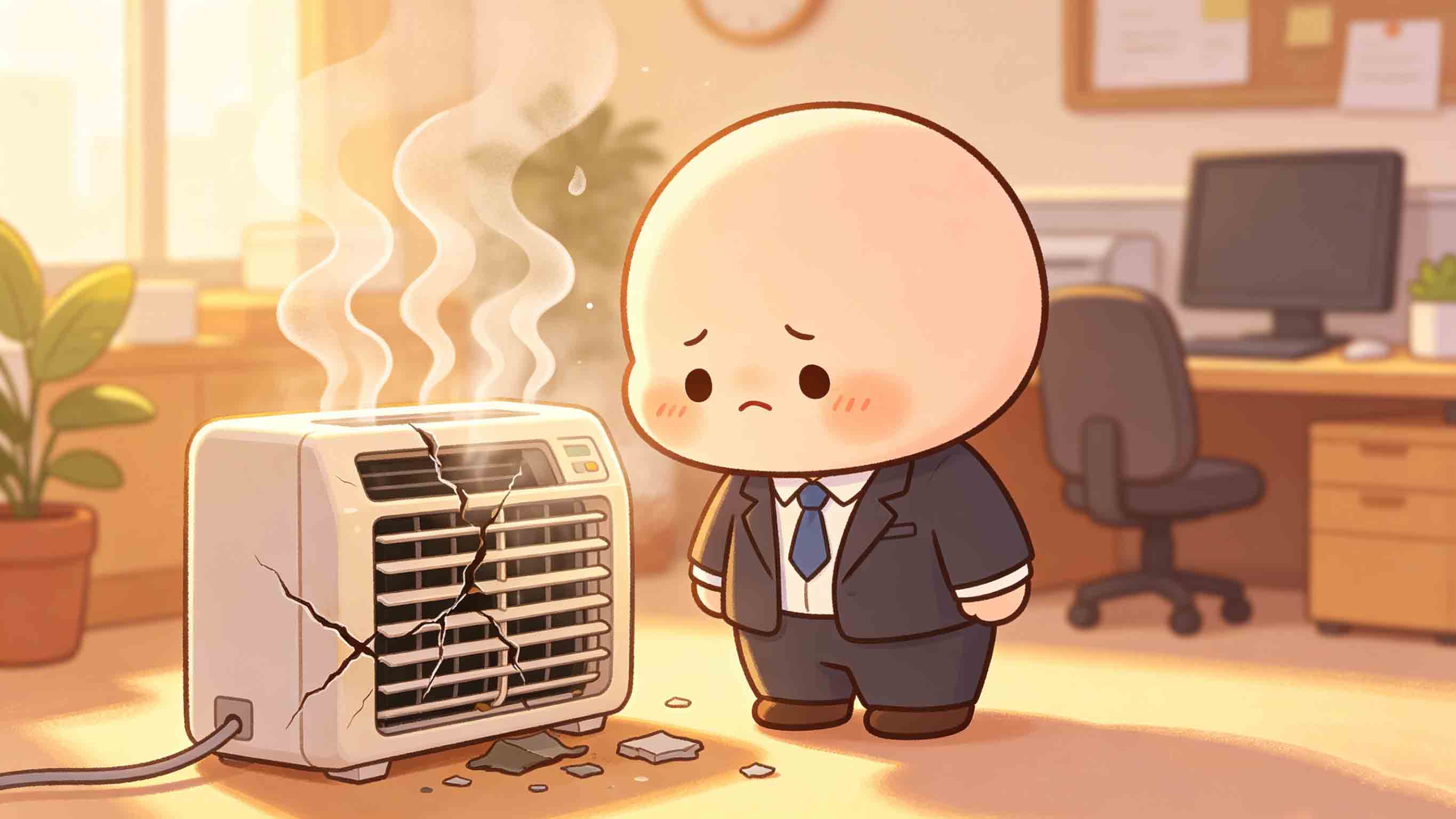
His name is Xiao Chengzi. Just look at him—how ridiculous. The boss hadn’t replied to his message for just a few hours, and he’d already imagined he’d gone through the entire resignation process. A text message with no punctuation at all had turned into a full-fledged workplace horror movie in his mind, and he was the first person to appear—and get fired.
But after I laughed, my throat felt a little tight.
That disaster projector of his, which never turns off, had been planted in his mind a long time ago. One day in a large classroom, the phrase “You’re not doing this right” fell upon his heart like an insignificant seed, took root there, and sprouted into a tree ready to bear fruit at any moment. And he himself probably didn’t realize that, over all these years, he had been talking to that vague figure—Look, I’ve done my best; look, I haven’t done anything wrong—but that person had long since vanished from the flow of time and had never once responded.
Xiao Chengzi treated “the pursuit of perfection” as a suit of armor, believing that by becoming invulnerable and airtight, he would never again have to hear the words “no.” But this armor was covered in barbed hooks, each one digging deep into his flesh. His chest felt tight, his stomach sank, and his heart nearly leapt out of his mouth—his body was bearing all the fears he couldn’t bring himself to voice.
The cruelest thing was that voice of reason. That voice knew everything and could explain it all to him, one by one: This is catastrophic thinking, a cognitive bias, a stress response caused by childhood trauma. But it was like a scholar—possessing all the knowledge but powerless to change the outcome—watching a beast escape from its cage and tear the entire night to shreds. He believed he had his emotions under control, but in reality, the beast had merely fallen into a temporary slumber.
This rotten orange found the most painful way to save itself: to imagine the worst-case scenario for everything and reduce everything to the absolute minimum. If it’s gone, it’s gone—he’s lost his job, his life is over—what else can he do? There’s a bleak, resolute quality to this approach, as if a person were burying themselves alive in their own mind to stop fearing death. That sleepless night, he kept performing this kind of psychological surgery on himself.
But he still hesitated for a moment, as some memories came flooding back. An afternoon in middle school, sunshine, the SFC emulator, *Super Mario World*. Back then, the term “family of origin” wasn’t part of everyone’s vocabulary, nor was there that sense of confusion about the future—like a dark cloud obscuring the sky. He was simply trying to find a hidden path, and he was just happy. That afternoon, spanning so many years, suddenly reappeared, like a dear old friend gently caressing his forehead.
Perhaps that child searching for hidden paths is doing exactly what we’re doing right now: looking for another way out in a world that appears flat. He has always been there.
It was dark outside. He knew his boss still wouldn’t reply to his message tomorrow, that there would still be problems with his probation period, and that the voice would resurface—but that afternoon playing Mario had truly happened. That brief moment was real.
I looked in the mirror, and Little Orange was still there. He was funny, pitiful, and admirable. He was fighting a battle with no hope of victory, yet he’d held on this long. I wanted to comfort him, but his tears were flowing like juice—and they even smelled like Orange Juice—so I couldn’t help but laugh; it was quite funny.
Little Orange will eventually realize that the secret passage isn’t in the game—it lies in a fleeting moment in time, in the afternoon sunlight of her memories.